

Remote-First vs Hybrid: 2026 Decision Guide
TL;DR
- A remote-first company is built for distributed, asynchronous work, not as a perk, but as the operating default.
- Hybrid work blends in-office rituals with remote flexibility, but still relies on synchronized time and visibility management.
- Distributed models expand remote-first into a global coverage system spanning time zones and compliance zones.
- In 2026, enterprise strategies diverge: AI-native startups scale async; large incumbents return to hybrid for control and compliance.
- The right model depends on work type, automation maturity, and governance posture, not slogans.
What You’ll Learn
- Clear, working definitions of remote-first, hybrid, and distributed, and what they mean operationally.
- How enterprise work models are evolving across sectors in 2026.
- The decision matrix that maps work type, collaboration intensity, and automation maturity.
- Transition playbooks for shifting between hybrid and remote-first models.
- Visibility systems that anchor distributed accountability in Slack and Jira.
- How Troopr enables location-agnostic operations with automated reports, check-ins, and SLAs.
- Real-world governance and security practices (SOC 2, SSO, audit logs) for enterprise remote setups.
Definitions That Matter
Remote-First (Async-Native, System-Led)
A remote-first company assumes that work happens effectively without a central office. Physical spaces, if they exist, serve as optional hubs for periodic in-person collaboration. The defining principle is asynchronous-first communication, where documentation, clarity, and shared systems replace real-time presence.
Core Traits:
- System over supervision: Productivity is measured by deliverables and metrics, not screen time.
- Documentation-led: Teams rely on written, searchable records over ad-hoc meetings.
- Toolchain cohesion: Slack, Jira, and Confluence serve as the connective tissue for communication, tracking, and knowledge.
- Equal access: Policies and tooling eliminate proximity bias, ensuring remote and in-office staff operate on the same footing.
Troopr relevance: In a remote-first setup, Troopr automates async visibility. Daily check-ins, sprint reports, and SLA dashboards run directly inside Slack — meaning updates reach everyone, regardless of time zone.
→ See how Troopr Check-ins replace status meetings with async reports.
Hybrid (Ritual-Anchored, Visibility-Managed)
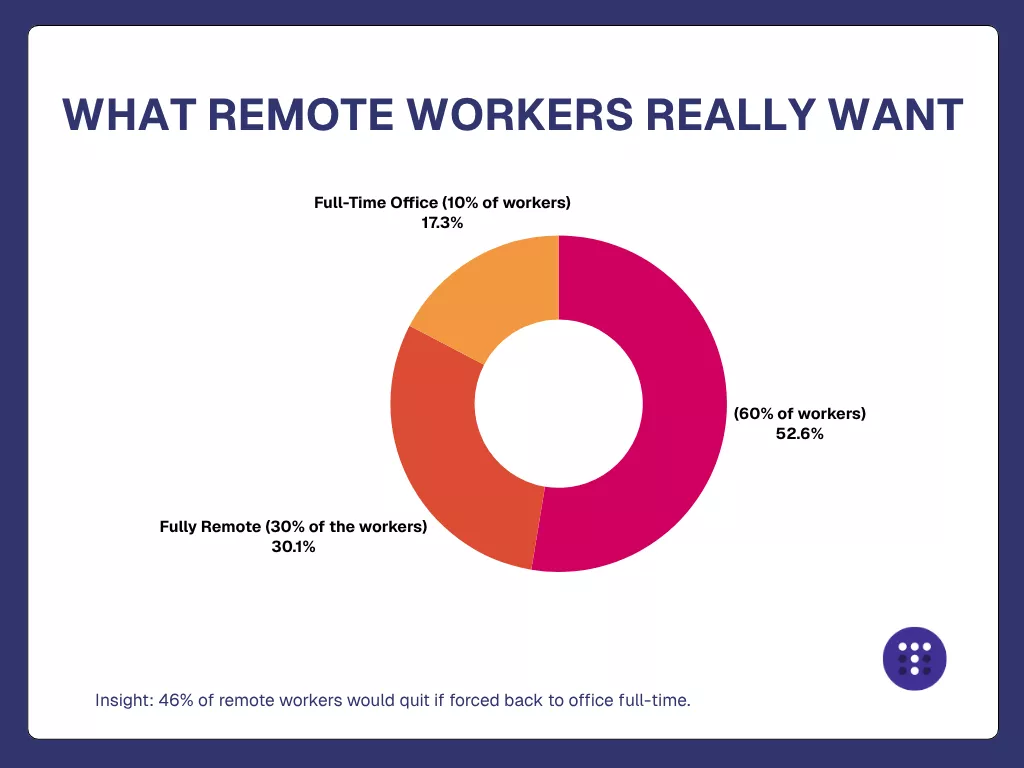
A hybrid company distributes work partially, combining in-office collaboration with remote autonomy. However, most hybrids still depend on visibility rituals (standups, syncs, review meetings) to align teams. The challenge: balancing flexibility with fairness and measurable outcomes.
Core Traits:
- Office as coordination center: Shared days for sprint planning, retros, or design reviews.
- Visibility-driven management: Leaders rely on synchronous rituals for assurance and accountability.
- Policy-driven flexibility: Employees may choose office days, but workflows are still designed for co-presence.
Troopr relevance: Hybrid teams often struggle with fragmented updates, half in Slack, half in Jira. Troopr connects the two, so status, blockers, and sprint metrics surface automatically in Slack.
→ Explore Hybrid Work Metrics: Visibility with Slack + Jira to see how this system works.
Distributed (Global Coverage Model)
A distributed company extends remote-first principles globally, optimizing not just for flexibility, but coverage. It’s not about working anywhere; it’s about ensuring someone is always working.
Core Traits:
- Follow-the-sun model: Teams across time zones maintain continuous delivery cycles.
- Localized compliance: Hiring and payroll adapt to regional regulations.
- Tool standardization: Security, auditability, and automation are centralized to prevent silos.
Troopr relevance: Distributed teams rely on Troopr’s Charts, Reports & Reminders to maintain shared visibility across time zones — without chasing updates.
Enterprise Signals in 2026
Big Tech and Financial Services Split Strategies
2026 marks a divergence between control-driven incumbents and automation-native disruptors.
- Big Tech and BFSI (Banking, Financial Services, Insurance) are rebalancing toward hybrid work models. The driver isn’t preference, it’s regulatory risk and data control.
- Financial firms face stricter audit trails and on-site compliance mandates (e.g., MiFID II in Europe, SEC Rule 17a-4 in the U.S.), pushing them to maintain supervised hubs.
- Cloud hyperscalers and SaaS giants (Microsoft, Google) maintain hybrid footprints to manage high-security workloads while retaining cross-functional innovation.
- In contrast, AI-native startups born post-2020 have no legacy real estate or synchronous bias. They design for remote-first operations, async by architecture, cloud by necessity.
This bifurcation signals a structural truth: remote-first thrives where trust and tooling replace proximity; hybrid endures where governance and perception require it.
→ Related reading: Hybrid Work Policy for Engineering & IT
AI-Native Startups and Async Culture at Scale
In the AI era, async is not a preference, it’s a scaling mechanism.
- Startups like GitLab, Zapier, and Deel continue to operate fully remote with asynchronous-first principles — each milestone documented, every decision searchable.
- AI copilots and automations (like Troopr) are reducing the need for synchronous updates by generating auto-summaries, meeting notes, and performance snapshots.
- Outcome-driven management replaces presence-driven culture. Instead of “who was in the meeting,” leaders ask “what moved forward.”
Why this matters: The “async maturity gap” is now a strategic differentiator. Companies that master structured documentation, task-linked communication, and automated reporting gain velocity, without the chaos of constant meetings.
→ Related reading: Hybrid Work Playbook: Models & Automation
Regional Compliance and Talent Regulations Shaping Location Policy
Global expansion comes with compliance gravity.
- Data residency laws (GDPR in the EU, CCPA in the US) dictate where and how employee and customer data can be processed — influencing where teams are hired.
- Employment frameworks (EOR models, contractor laws, payroll taxes) determine the feasibility of remote-first hiring.
- AI governance and export control frameworks (EU AI Act, US AI Executive Order) are already influencing remote R&D operations.
The outcome: companies are no longer choosing between “remote” or “office” — they’re designing compliance-aware work architectures.
Decision Framework
Work Type and Collaboration Intensity
Every organization sits somewhere on the collaboration spectrum. The right model depends on how synchronous the work must be.
Guiding rule: If work can be documented, it can be async. If it depends on fast feedback loops, a hybrid anchor may still be required.
Tooling and Automation Maturity
A company’s ability to operate remotely depends on its workflow automation depth.
Low Maturity (Manual Hybrid):
- Reliance on video meetings for progress tracking
- Updates buried in Slack threads
- Disconnected dashboards
Medium Maturity (Tool-Assisted Hybrid):
- Jira used for task visibility; Slack for quick updates
- Reports manually shared
- Occasional async check-ins
High Maturity (Automation-Led Remote-First):
- Slack-Jira automation ensures real-time visibility
- Reports, check-ins, and alerts run on schedule
- No dependence on synchronous rituals
Troopr helps organizations move from medium to high maturity by unifying Slack and Jira workflows, replacing manual follow-ups with automation.
→ Try Automated Jira Reports in Slack to benchmark your current visibility level.
Cost, Risk, and Regulatory Footprint
Choosing between remote-first and hybrid isn’t just cultural, it’s financial and regulatory.→ Case study: Creditas uses Troopr to automate Scrum ceremonies across time zones.
Transition Playbooks
From Hybrid to Remote-First (and When It Fails)
Transitioning from hybrid to remote-first isn’t just a facilities shift — it’s a behavioral re-engineering.
Many enterprises attempt it for cost savings or global reach, but without retooling communication and visibility systems, the transition fails.
Transition Steps
- Redefine success metrics: Move from attendance-based to output-based KPIs (velocity, SLA adherence, delivery cycles).
- Codify async communication: Replace ad-hoc Slack threads with structured check-ins and documentation.
- Automate reporting: Replace standups and sprint reviews with automated summaries inside Slack.
- Redesign onboarding: Async-first onboarding modules replace office-based mentoring.
- Reinforce culture through transparency: Share project dashboards openly to eliminate isolation.
When it fails:
- Leadership underestimates the need for written clarity.
- Managers continue expecting synchronous responsiveness.
- Tools remain fragmented, leading to shadow reporting.
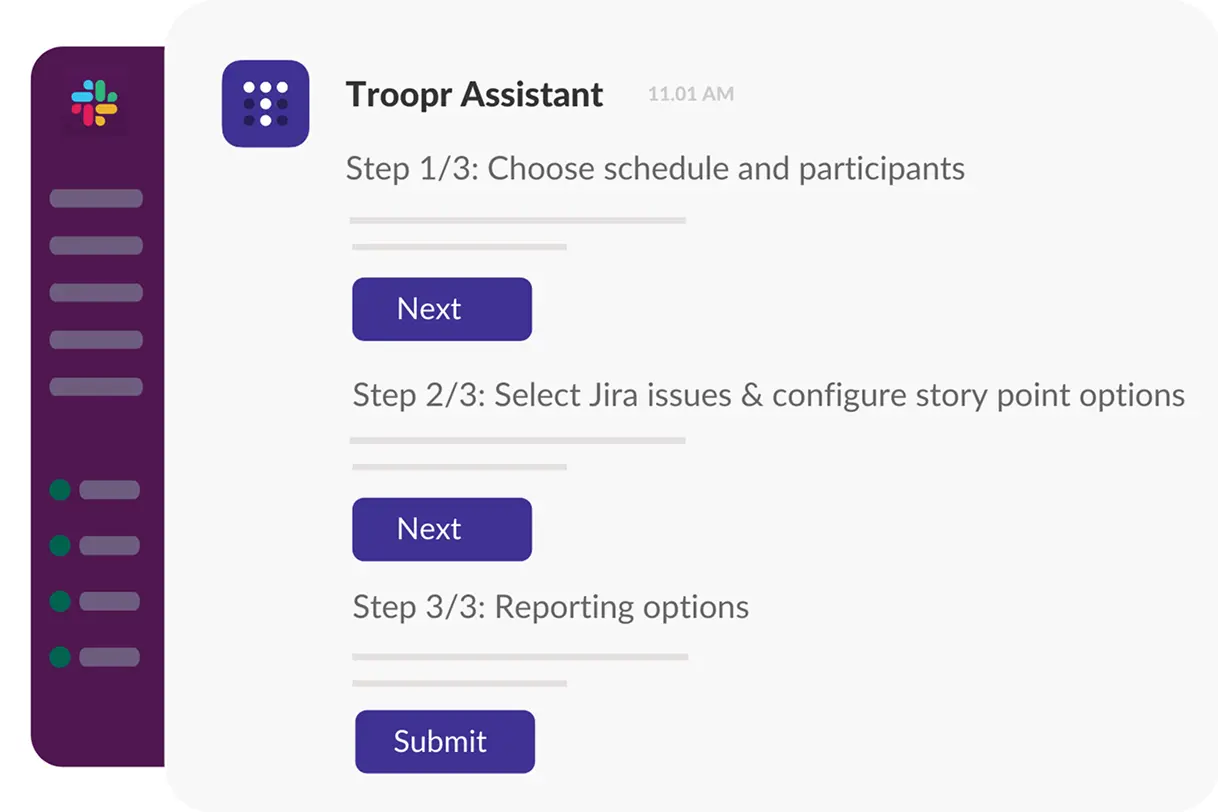
Troopr in practice: Troopr automates visibility hygiene. With check-ins and Jira-linked reports delivered to Slack, teams no longer rely on daily syncs to stay aligned.
→ Explore how Creditas scaled async ceremonies across time zones using Troopr.
From Remote-First to Hybrid-Flex (and Why Enterprises Revert)
Some remote-first organizations revert to hybrid-flex models after scaling beyond 500 employees. The reason isn’t failure — it’s management density.
At scale, spontaneous collaboration and cross-functional bonding need ritual anchors.
Key Drivers for Reversion:
- Onboarding Complexity: New hires learn culture slower without physical cues.
- Compliance Load: Cross-border payroll and data protection complexity rise steeply.
- Executive Alignment: Leaders prefer in-person strategic cycles for cohesion.
Hybrid-Flex Best Practices:
- Mandate quarterly in-person cadences (not weekly).
- Use automation to sustain async visibility between those cadences.
- Anchor the hybrid rhythm in tools, not locations.
Troopr in context: Hybrid-flex organizations often use Troopr to sustain async workflows between office weeks — replacing status meetings with automated progress reports.
→ Related reading: Hybrid Work Schedule Templates & Rollout
Visibility and Accountability Systems
Slack + Jira as the Shared Control Plane
In distributed operations, visibility systems are not optional, they are the substitute for presence. The most effective stack in 2026 is Slack + Jira integrated into a single control plane.
Slack’s Role:
- Central hub for real-time and async conversations.
- Acts as the interface layer for updates, alerts, and feedback.
Jira’s Role:
- System of record for work ownership, issue tracking, and SLA metrics.
- Enables audit-ready visibility and performance baselines.
Integration Layer:
Without integration, updates remain buried in Slack or outdated in Jira. Troopr bridges that gap:
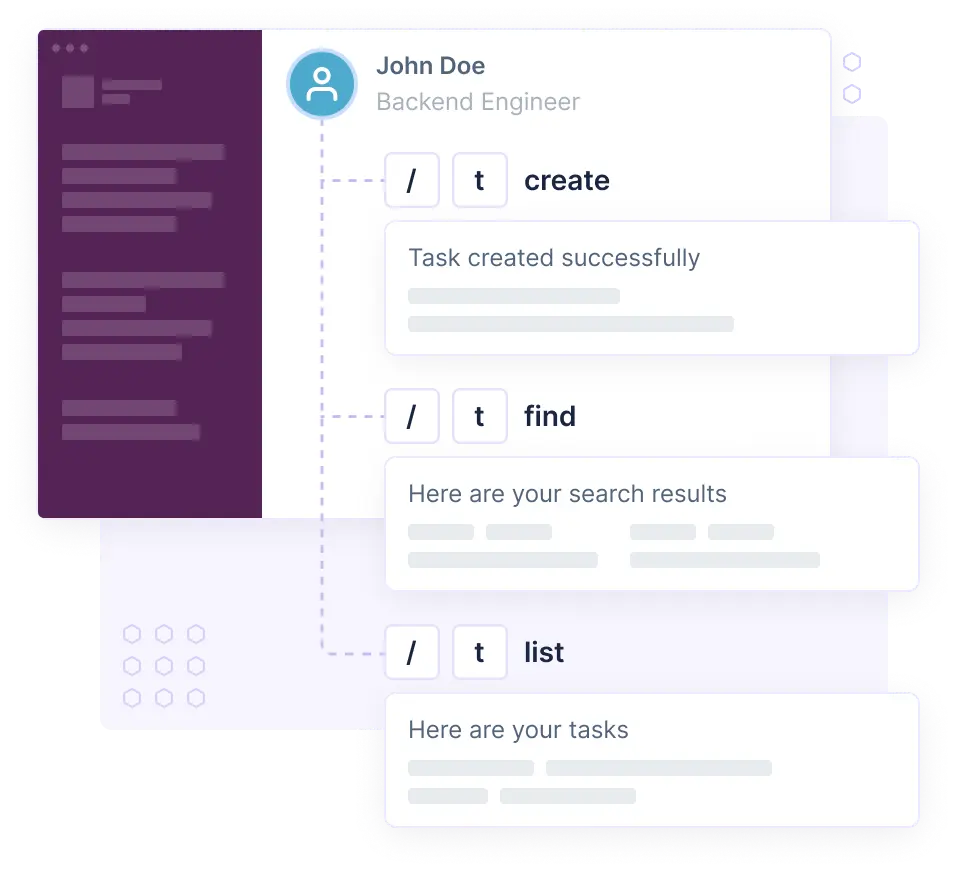
- Bi-directional sync: Jira updates reflect in Slack; Slack actions create Jira issues.
- Automation layer: Reports, reminders, and sprint summaries run automatically.
- Context continuity: Each message is tied to a Jira entity, preserving traceability.
Troopr Automation and the “Location-Agnostic SLA”
In remote-first and distributed setups, accountability must not depend on visibility. Troopr introduces a model called the location-agnostic SLA , where every deliverable and update is system-tracked, not manager-tracked.
How it works:
- Automated Check-ins: Troopr prompts team members for async updates in Slack, pulling context from Jira.
- Real-Time Reports: Project dashboards are auto-generated and shared to relevant Slack channels.
- SLA Reminders: Tasks nearing deadlines trigger automated Slack nudges, keeping work on track without micromanagement.
- Manager Dashboards: Aggregated insights by team, sprint, or SLA are visible at a glance, replacing hours of manual status gathering.
Impact:
- Converts subjective visibility into objective data.
- Respects focus time by reducing meeting load.
- Delivers compliance-grade audit trails automatically.
→ See Troopr Routines for how enterprises automate reporting inside Slack.
5-Item Action Checklist
Clarify your model. Define if your organization’s core work type supports async operations or requires synchronous collaboration.
Audit your tools. Identify where visibility breaks — usually between Slack and Jira.
Automate reporting. Use Troopr to eliminate manual status updates and recurring sync meetings.
Train for async. Make documentation and outcome-based evaluation part of your culture.
Secure and scale. Adopt SOC 2-compliant, SSO-integrated systems to maintain governance across regions.
FAQs
1. What is a remote-first company?
A remote-first company is one that operates under the assumption that all work can be done effectively without requiring employees to be physically co-located. Offices, if they exist, are optional collaboration spaces. Workflows emphasize asynchronous communication, documented processes, and automation for visibility.
2. How is a remote-first company different from hybrid work?
In a hybrid model, teams split time between office and remote work, often relying on in-person rituals for alignment. In a remote-first setup, async communication and system-led visibility replace those rituals, ensuring location doesn’t affect performance or progression.
3. What are the main challenges of going remote-first?
The top three are:
- Lack of async discipline (too many synchronous meetings).
- Fragmented tools and visibility gaps.
- Managerial bias toward those visible in office.
Enterprises solve this with automation, connecting Slack, Jira, and Troopr to create a single visibility layer.
4. How do remote-first companies ensure accountability?
By designing system-led accountability. Tools like Troopr automate progress tracking, pull metrics directly from Jira, and publish updates in Slack. This ensures every deliverable, SLA, and dependency is visible across teams and time zones, without needing check-in meetings.
5. How do hybrid or remote-first setups maintain security and compliance?
Through infrastructure, not oversight. SOC 2 Type II, SSO, encryption, and audit logging ensure data protection even in distributed environments. Troopr inherits the security posture of both Slack and Jira, making it viable for enterprise-grade compliance needs.


The AI project manager for engineering teams. Forms its own view of the work and does the coordination, right where your team already works.
101 Arctic Circle, Round Rock, Texas 78664, United States.